
Bearings for Manufacturing Environments: An Overview Guide
Bearings for manufacturing environments aren’t particularly sexy. But they are the unsung heroes of any modern plant. They reduce friction, support loads, and keep things moving. From high-speed turbines to basic conveyor rollers, they play a critical role across almost every industry.
But not all bearings are created equal. And when you’re working in manufacturing environments that push materials to their limits, the right spec isn’t a luxury – it’s essential.
This guide walks junior engineers, apprentices, and new trade desk staff through the essentials. We’ll explain what bearings do, how to choose them, and which features matter most. Whether you’re stocking shelves, supporting production lines, or fielding tech calls, this is your bearings 101.
Why Bearing Specification Matters in Manufacturing.
Bearings for manufacturing environments are often overlooked … until they fail. But getting the spec right from the start prevents costly breakdowns and keeps production lines moving smoothly.
- Keep performance and service life on track – under spec a bearing and it’ll wear fast; over spec and you’re wasting money and space.
- Avoid safety or quality failures – mis-specified bearings can damage shafts, housings, or surrounding parts. Choosing based on size alone – without considering load, speed, or environment – is also another fast track to failure. The wrong bearing will wear unevenly, run hot, or seize entirely. All of this can lead to catastrophic machine failure.
- Win specifications and audits – documented, correct specs keep your approval process smooth and your factory floor safe.
Checklist: Spotting Spec Errors Early
- Is the bearing failing faster than expected?
- Does it run hot or vibrate under normal loads?
- Are failures happening in the same location?
If yes to any of these, check the spec. Think of it this way: your bearing is only as good as its environment. Wrong spec? Wrong results.
Common Types of bearings in Manufacturing Environments.
Understanding the basic types helps narrow down options when a customer calls or you’re scanning catalogues.
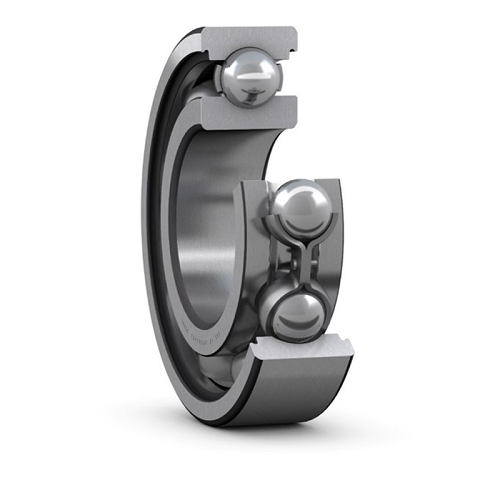
Ball Bearings
- Handle moderate loads at high speeds.
- Found in motors, fans, pumps.
- Low friction = less heat and better energy efficiency.
Roller Bearings
- Carry heavier radial loads.
- Used in gearboxes, conveyor systems, and heavy machinery.
- Rollers spread the load better than balls.

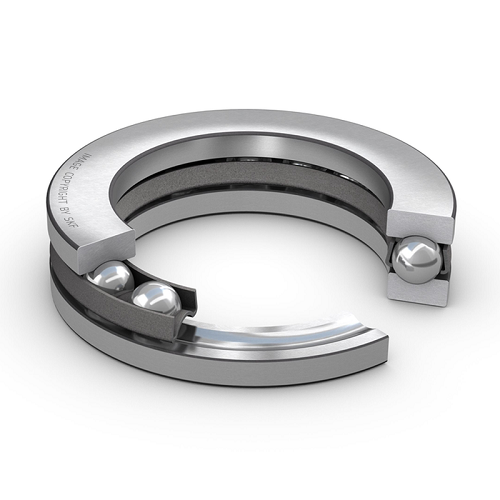
Thrust Bearings
- Built for axial (in-line) loads.
- Common in vertical shafts, turntables, and screw drives.
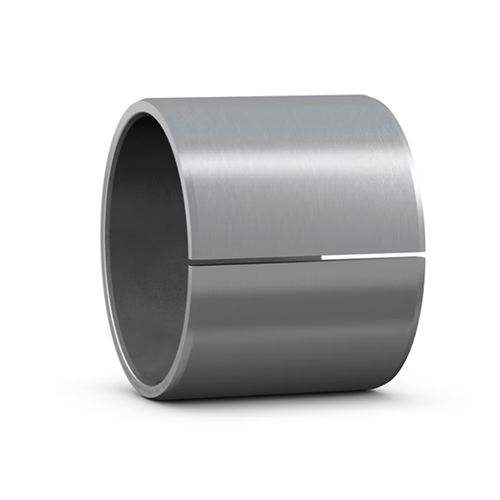
Plain Bearings (Bushings)
- No rolling elements.
- Handle oscillating or sliding movement.
- Found in pivot points, hinges, and heavy-duty linkages.
Materials and Tolerances in Bearings for Manufacturing Environments.
Materials affect performance. So do tolerances. Know both before you spec.
Common Materials
- Chrome Steel (AISI 52100): Strong and cheap, but rusts if exposed to water.
- Stainless Steel (304/440): Corrosion resistant. Ideal for food, washdown, and marine environments.
- Ceramic: Light, hard, and heat resistant. Perfect for high-speed or chemical exposure.
- Polymers: Lightweight and chemical-resistant. Suited for lab and light-load environments.
Shielded vs Sealed Bearings
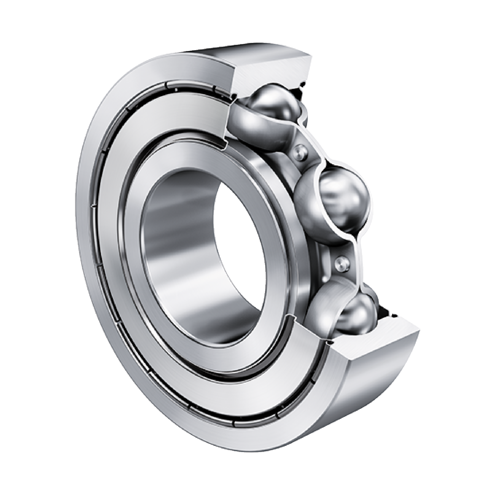
- Shields: Thin metal discs. Low friction, but basic protection. Best in clean, high-speed environments.
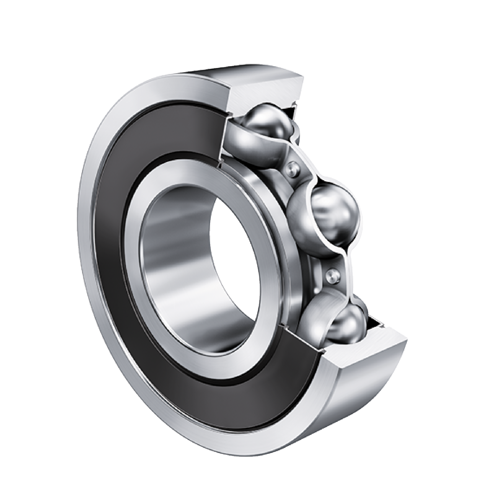
- Seals: Tight elastomer lips in contact with the inner ring. Offer better protection against dirt and liquids, but slightly more drag.
- Labyrinth Seals: Non-contact, twist-path seals. Excellent in dirty or damp conditions. They block contaminants while reducing friction.
Tolerances
- ISO or ABEC codes indicate precision.
- Higher grade = tighter tolerance = higher cost.
- Most industrial applications use ISO 6 or 7.
- Choose the tolerance level your application actually needs – no more, no less.
Load, Speed and Life in Bearings for manufacturing enviornements – Made Simple.
You don’t need to be a mathematician. Just understand the basics.
Radial vs Axial Load
- Radial: Acts perpendicular to the shaft.
- Axial: Acts alongside the shaft.
- Some bearings can handle both. Some can’t. Choose wisely.
Speed Rating
- Every bearing has a max RPM.
- Go over it, and you’ll overheat or destroy seals and grease.
Speed Factor (n × dm)
- Multiply RPM (n) by mean bearing diameter (dm in mm).
- High numbers mean heat buildup and lube breakdown.
- The higher the value, the more careful you need to be about materials and grease.
L10 Life Rating
- Predicts how long 90% of bearings will last under set conditions.
- Often shown in hours or revolutions.
- Ball bearings: L₁₀ = (C / P)³
- Roller bearings: L₁₀ = (C / P)^(10/3)
- C = dynamic load rating; P = applied load
- Underestimate, and bearings fail early. Over spec, and you’re wasting budget and space.
CAD, Simulation and Spec Sheets: What You Actually Need to Know.
Key Data on a Spec Sheet
- Bore size, outer diameter, width.
- Load ratings (dynamic and static).
- Max speed.
- Material, lubrication, and sealing type.
Use CAD Models and FEA
- Load the bearing into your CAD design early.
- Most manufacturers offer 3D files for SolidWorks, AutoCAD, or Fusion360.
- Basic Finite Element Method (FEM) tools can simulate stress and life, even for junior engineers.
Always Finalise After CAD Fit
- CAD blocks are a starting point – not a final spec.
- Always double-check real-world load, speed, material, and seal ratings before placing an order.
Classic Pitfalls in Bearing Selection (And How to Dodge Them).
Avoid the mistakes that waste time, money, and stock.
top mistakes
- Choosing based on size only.
- Replacing a failed bearing without checking the cause.
- Ignoring lubricant type or seal compatibility.
- Fitting two fixed bearings on one shaft – leave room for thermal movement.
- Reusing old stock without checking grease condition.
best practices
- Match the bearing to the job. Not just the part number.
- Log what’s failed and why. Use that data next time.
- If in doubt, contact your supplier for a full spec sheet.
Quick Reference: Choosing Bearings by Application.
High-Speed Applications
- Use ceramic or hybrid designs.
- Choose low-viscosity grease or oil lubrication.
- Watch heat generation and shaft balance.
Why it matters: High speeds create heat and centrifugal force that can destroy standard bearings. Ceramics handle speed without deformation and reduce friction.
Dirty/Dusty Environments
- Sealed designs with labyrinth or contact seals.
- Regular lubrication or auto-lube systems.
Why it matters: Dust and grit act like sandpaper. Seals and consistent lube keep debris out and reduce abrasive wear.
Washdown Zones
- Stainless or polymer housing.
- IP66 or IP69K seals.
- NSF H1 lubricants only. Learn more about NSF ratings here.
Why it matters: Washdowns are brutal on standard bearings. High ingress protection and food-safe materials prevent contamination and extend life in wet, hygienic settings.
For a more in-depth look at bearings for washdown zones read our Guide to Bearings in Food Processing Environments.
High Load, Low Speed
- Tapered or spherical roller bearings.
- Solid housing and tight shaft fit.
Why it matters: Slow-moving doesn’t mean easy. These environments need bearings that can take high pressure without brinelling or deformation.
Precision Applications
- ABEC/ISO Class 3 or better.
- Minimal vibration and noise tolerance.
- Lubrication consistency matters.
Why it matters: Measurement and control applications need accuracy. High-grade bearings ensure repeatability and stability under micro-movement or continuous duty.
Cleanroom Applications – Dry vs Wet Process
Dry Cleanrooms
- Found in electronics, aerospace, and medical device production.
- Focus on low particle emission and low-outgassing lubricants.
- Bearings often ceramic or hybrid, with non-contact seals for minimal drag.
- Corrosion resistance less critical than in wet areas.
Wet-Process Cleanrooms
- Found in high-care food, beverage, dairy, and biotech facilities.
- Combine particle control with frequent washdowns and high humidity.
- Bearings must have IP66/IP69K seals, stainless/polymer housings, and self-draining designs.
- NSF H1 grease required, with compatibility for cleaning chemicals.


Why it matters
Choosing a dry-rated bearing for a wet cleanroom (or vice versa) can cause early failure, contamination, and failed audits.
For a more detailed information about cleanroom bearings read Bearings for Manufacturing Clean Spaces.
Glossary: Bearings for manufacturing environments for Beginners.
Axial Load – Load that runs along the shaft.
Ball Bearing – Bearing with rolling balls inside to reduce friction.
Cage – Keeps rolling elements spaced evenly.
Contact Seal – Rubber layer in contact with the inner ring to stop ingress.
Dynamic Load Rating (C) – The load it can carry during rotation.
Face Seal – Surface-mounted seal for flat applications.
Hybrid Bearing – Bearing with ceramic balls and steel races.
IP Rating – Tells you how well it resists dust and water.
Labyrinth Seal – A complex seal path that blocks dust without contact.
L10 Life – Predicts lifespan for 90% of bearings under standard load.
Plain Bearing – Smooth, sliding bearing with no moving parts.
Radial Load – Load applied at 90° to the shaft.
Roller Bearing – Uses cylindrical rollers to spread the load.
Sealed Bearing – Comes pre-lubricated with built-in protection.
Shield – Thin metal ring to deflect debris but not watertight.
Speed Factor (n x dm) – RPM times bearing diameter; helps you spec lubrication.
Static Load Rating (C₀) – Max load before deformation – when the bearing isn’t turning.
Tolerance Class – Precision level. Higher number = tighter, smoother.
Thrust Bearing – Designed to take load in line with the shaft.
CONCLUSION
When it comes to bearings for manufacturing enviornments, gtting it right isn’t just about avoiding breakdowns. It’s about knowing the loads, the speeds, the materials – and where the bearing is going to live. If you’re on the trade desk or new to engineering, start with the basics. Check the spec. Understand the job. Use this guide as a cheat sheet.
At Godiva Bearings, we supply exclusively to the trade. No end users. No retail. Just support, stock, and real-world service.

TOM HAMLETT
Tom Hamlett is a respected authority in the global bearings marketplace, with over 35 years of experience in industrial bearings, lubricants, and adhesives across a wide range of industries. As Managing Director of Godiva Bearings, Tom has built a trusted business renowned for its commitment to quality, technical expertise, and ethical service. Under his leadership, Godiva Bearings has remained the UK’s only trade-exclusive bearings supplier, proudly serving engineers and distributors worldwide since 1977. Tom’s in-depth knowledge and dedication have cemented his reputation as one of the most knowledgeable figures in the sector.