

Is Your Bearing Food-Safe? How to Avoid Hidden Hygiene Risks
Knowing your bearings are food-safe is vital, as food factories are some of the harshest environments a bearing will ever face. High-pressure washdowns, aggressive chemicals, rapid temperature swings, and strict hygiene standards all work together to expose weaknesses fast. A bearing may look clean on the outside, but hygiene risk usually begins inside the unit: in the lubricant, seals, materials, and housing.
In 2026, “food safe” is no longer a nice-to-have. It’s a baseline expectation from auditors, retailers, and insurers. If a bearing can’t meet hygiene standards, the whole site is exposed — even if the exterior looks spotless.
Before we dive deeper, here’s a quick compliance snapshot to help you understand the essentials at a glance.
Quick Compliance Snapshot
H1 Lubrication
H1-approved lubricants for incidental food contact. Supports hygiene standards and reduces contamination risk.
Washdown Ready
Corrosion-resistant materials and sealed designs engineered for high-pressure cleaning and chemical exposure.
Fully Traceable
Verified manufacturer sourcing with documentation available. No grey-market or unregulated stock.
The Hidden Hygiene Risks Inside Bearings
Visual checks won’t tell you whether a bearing is food safe. The most serious hygiene failures come from internal contamination risks, such as:
Non-food-safe lubricants
If the grease isn’t H1 food-grade, even a tiny leak can trigger a reportable incident.
Seal failure under washdowns
High-pressure jets can drive water and cleaning agents into bearings with weak seals.
Corrosion under housings
Standard housings pit or rust during washdowns, creating hygiene hazards.
Untraceable or counterfeit imports
Grey-market bearings often lack documentation, material consistency, and lubrication verification.
Temperature shock
Rapid heat changes cause seal deformation and grease breakdown.
Food-Grade Identification
A bearing is food safe when it uses H1 lubricant, corrosion-resistant materials, washdown-ready seals, and full traceability.
If documentation is missing, the bearing cannot be considered compliant.

2026 Update — Why Food-Safe Bearing Compliance Matters More Than Ever
Regulators and retailers now look beyond visual cleanliness and focus on:
- lubricant classification
- washdown resistance
- sealing integrity
- housing material
- audit-ready traceability
Global online marketplaces have also increased unregulated imports. Bearings that look identical may not meet the same hygiene or lubrication standards — and auditors know it.
This shift is why more factories rely on verified trade-only suppliers for documentation and consistent, compliant stock.
How to Check If a Bearing Is Truly Food Safe
Use this practical checklist during audits or maintenance planning.
Confirm lubrication class
Look for H1 or NSF-certified lubricants.
Check the seals
Washdown-ready seals withstand pressure, heat, steam, and chemicals.
Inspect the housing material
Typical food-safe options: stainless steel, thermoplastic, corrosion-resistant coatings.
Verify documentation
Traceability and lubrication verification should be immediate.
Evaluate washdown suitability
“Water resistant” is not the same as “washdown safe.”
Common Myths About Food-Safe Bearings
“All bearings tolerate washdowns.”
Only until steam or chemicals hit it.
“If it spins, it’s fine.”
Most don’t — their seals and grease break down.
“We’ve never had an issue, so we’re safe.”
Hygiene failures often begin invisibly.
“Online bearings are the same but cheaper.”
Counterfeits and unregulated imports put liability on you, not the website.
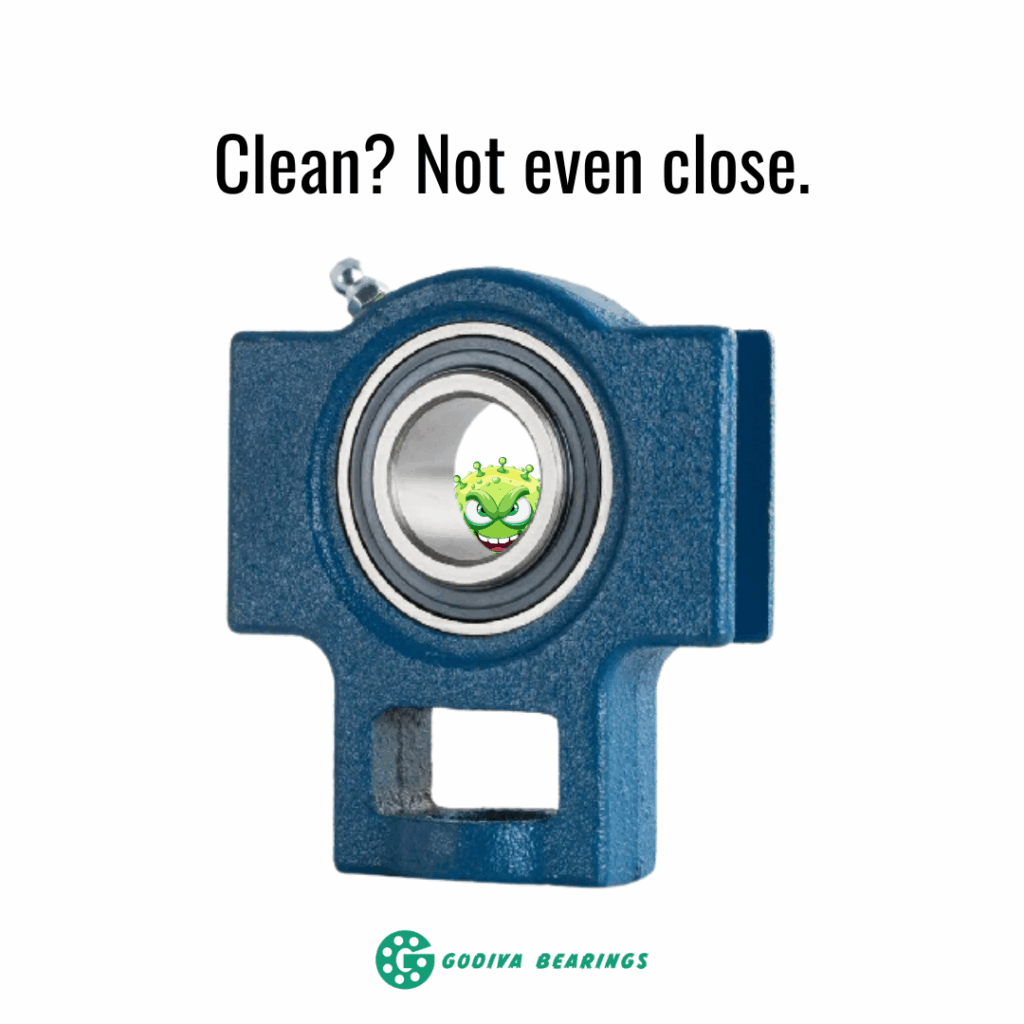
Why Standard Bearings Fail
Standard bearings fail in food factories due to weak seals, non-food-safe grease, corrosion, and chemical vulnerability. Food-grade bearings are engineered to survive these conditions safely.
Where Washdown Processes Go Wrong
Washdowns are now more intense, frequent, and chemically aggressive than previous years.
Common failure modes include:
High-pressure jet intrusion
Weak seals allow ingress during cleaning.
Thermal shock stress
Sudden temperature changes distort seals and housings.
Chemical degradation
Industrial detergents break down non-food-safe greases and polymers.
Poor drainage
Water pooling beneath housings encourages bacterial growth.
For deeper detail, explore:
Food-Line Washdowns: Hidden Problems & Fixes

Why Source From a Trade-Only Supplier?
Food factories rely on documentation, consistency, and reliable sourcing. Trade-only suppliers strengthen compliance by:
- eliminating grey-market imports
- verifying lubrication class
- ensuring consistent material specifications
- maintaining stable supply
- supporting audit readiness
Explore how trade-only sourcing protects the supply chain:
Trade-Only Ethics Charter
Compliance Advantage
Trade-only suppliers reduce compliance risks by providing verified, traceable bearings with consistent H1 lubrication and corrosion-resistant materials, eliminating grey-market imports and protecting audit integrity.
Call Our Sales Team
If you’re unsure whether a bearing meets food-safe standards — or want help selecting the right spec for washdown-heavy environments — our trade-only team is available 24/7.
We’ll help you reduce risk, meet hygiene expectations, and stay fully audit-ready.

TOM HAMLETT
Tom Hamlett is a respected authority in the global bearings marketplace, with over 35 years of experience in industrial bearings, lubricants, and adhesives across a wide range of industries. As Managing Director of Godiva Bearings, Tom has built a trusted business renowned for its commitment to quality, technical expertise, and ethical service. Under his leadership, Godiva Bearings has remained the UK’s only trade-exclusive bearings supplier, proudly serving engineers and distributors worldwide since 1977. Tom’s in-depth knowledge and dedication have cemented his reputation as one of the most knowledgeable figures in the sector.